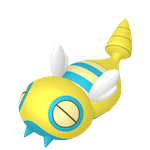
Dunsparce ノコッチ
Normal
Generation II
Land Snake Pokémon
Größe 1.5m Gewicht 14.0kg
Serene Grace
Run Away
Rattled (Versteckte Fähigkeit)
Pokémon-Profil
When spotted, this Pokémon escapes backward by furi ously boring into the ground with its tail.
Basiswerte
Basiswerte der Form:Dummisel · Gesamt 415
KP
100
Angriff
70
Verteidigung
70
Sp. Angriff
65
Sp. Verteidigung
65
Initiative
45
Grundinformationen
- Geschlechterverhältnis
- ♂ 50% / ♀ 50%
- Fangrate
- 190(24.8%)
- Ei-Gruppen
- Feld
- Ei-Zyklen
- 20
- Basis-Zuneigung
- 50
- FP-Ausschüttung
- KP+1
- Basis-Erfahrung
- 145
- Körperform
- Schlange
- Farbe
- Gelb
- Erfahrung
- 1,000,000(Ziemlich schnell)
Typen-Matchups Vollständige Typentabelle ansehen →
Defensiv (bei Angriff)
2× Schwäche
Fighting ×2
Immun
Ghost ×0
Offensiv (beim Angreifen)
Immun
Ghost ×0
1/2 Resistenz
Rock ×0.5
Steel ×0.5
Entwicklungslinie
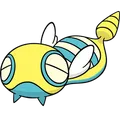 Dummisel
Level up while knowing Hyper Drill (at random; 99% chance)

Level up while knowing Hyper Drill (at random; 1% chance)

Erlernbarkeit
| Level | Attacken | Typ | Kategorie | Stärke | Genauigkeit | AP |
|---|---|---|---|---|---|---|
| — | Defense Curl | Normal | Status | — | — | 40 |
| — | Flail | Normal | Physisch | — | 100 | 15 |
| 4 | Mud-Slap | Ground | Spezial | 20 | 100 | 10 |
| 8 | Rollout | Rock | Physisch | 30 | 90 | 20 |
| 12 | Glare | Normal | Status | — | 100 | 30 |
| 16 | Screech | Normal | Status | — | 85 | 40 |
| 20 | Ancient Power | Rock | Spezial | 60 | 100 | 5 |
| 24 | Drill Run | Ground | Physisch | 80 | 95 | 10 |
| 28 | Yawn | Normal | Status | — | — | 10 |
| 32 | Hyper Drill | Normal | Physisch | 100 | 100 | 5 |
| 36 | Roost | Flying | Status | — | — | 5 |
| 40 | Dragon Rush | Dragon | Physisch | 100 | 75 | 10 |
| 44 | Coil | Poison | Status | — | — | 20 |
| 48 | Double-Edge | Normal | Physisch | 120 | 100 | 15 |
| 52 | Endeavor | Normal | Physisch | — | 100 | 5 |
| TM | Attacken | Typ | Kategorie | Stärke | Genauigkeit | AP |
|---|---|---|---|---|---|---|
| 招式学习器001 | Take Down | Normal | Physisch | 90 | 85 | 20 |
| 招式学习器004 | Agility | Psychic | Status | — | — | 30 |
| 招式学习器005 | Mud-Slap | Ground | Spezial | 20 | 100 | 10 |
| 招式学习器006 | Scary Face | Normal | Status | — | 100 | 10 |
| 招式学习器007 | Protect | Normal | Status | — | — | 10 |
| 招式学习器018 | Thief | Dark | Physisch | 60 | 100 | 25 |
| 招式学习器021 | Pounce | Bug | Physisch | 50 | 100 | 20 |
| 招式学习器022 | Chilling Water | Water | Spezial | 50 | 100 | 20 |
| 招式学习器025 | Facade | Normal | Physisch | 70 | 100 | 20 |
| 招式学习器026 | Poison Tail | Poison | Physisch | 50 | 100 | 25 |
| 招式学习器028 | Bulldoze | Ground | Physisch | 60 | 100 | 20 |
| 招式学习器029 | Hex | Ghost | Spezial | 65 | 100 | 10 |
| 招式学习器035 | Mud Shot | Ground | Spezial | 55 | 95 | 15 |
| 招式学习器036 | Rock Tomb | Rock | Physisch | 60 | 95 | 15 |
| 招式学习器041 | Stored Power | Psychic | Spezial | 20 | 100 | 10 |
| 招式学习器047 | Endure | Normal | Status | — | — | 10 |
| 招式学习器049 | Sunny Day | Fire | Status | — | — | 5 |
| 招式学习器050 | Rain Dance | Water | Status | — | — | 5 |
| 招式学习器051 | Sandstorm | Rock | Status | — | — | 10 |
| 招式学习器053 | Smart Strike | Steel | Physisch | 70 | — | 10 |
| 招式学习器055 | Dig | Ground | Physisch | 80 | 100 | 10 |
| 招式学习器059 | Zen Headbutt | Psychic | Physisch | 80 | 90 | 15 |
| 招式学习器065 | Air Slash | Flying | Spezial | 75 | 95 | 15 |
| 招式学习器066 | Body Slam | Normal | Physisch | 85 | 100 | 15 |
| 招式学习器070 | Sleep Talk | Normal | Status | — | — | 10 |
| 招式学习器083 | Poison Jab | Poison | Physisch | 80 | 100 | 20 |
| 招式学习器084 | Stomping Tantrum | Ground | Physisch | 75 | 100 | 10 |
| 招式学习器085 | Rest | Psychic | Status | — | — | 5 |
| 招式学习器086 | Rock Slide | Rock | Physisch | 75 | 90 | 10 |
| 招式学习器103 | Substitute | Normal | Status | — | — | 10 |
| 招式学习器106 | Drill Run | Ground | Physisch | 80 | 95 | 10 |
| 招式学习器114 | Shadow Ball | Ghost | Spezial | 80 | 100 | 15 |
| 招式学习器116 | Stealth Rock | Rock | Status | — | — | 20 |
| 招式学习器117 | Hyper Voice | Normal | Spezial | 90 | 100 | 10 |
| 招式学习器124 | Ice Spinner | Ice | Physisch | 80 | 100 | 15 |
| 招式学习器125 | Flamethrower | Fire | Spezial | 90 | 100 | 15 |
| 招式学习器126 | Thunderbolt | Electric | Spezial | 90 | 100 | 15 |
| 招式学习器128 | Amnesia | Psychic | Status | — | — | 20 |
| 招式学习器129 | Calm Mind | Psychic | Status | — | — | 20 |
| 招式学习器130 | Helping Hand | Normal | Status | — | — | 20 |
| 招式学习器132 | Baton Pass | Normal | Status | — | — | 40 |
| 招式学习器133 | Earth Power | Ground | Spezial | 90 | 100 | 10 |
| 招式学习器135 | Ice Beam | Ice | Spezial | 90 | 100 | 10 |
| 招式学习器141 | Fire Blast | Fire | Spezial | 110 | 85 | 5 |
| 招式学习器143 | Blizzard | Ice | Spezial | 110 | 70 | 5 |
| 招式学习器147 | Wild Charge | Electric | Physisch | 90 | 100 | 15 |
| 招式学习器149 | Earthquake | Ground | Physisch | 100 | 100 | 10 |
| 招式学习器150 | Stone Edge | Rock | Physisch | 100 | 80 | 5 |
| 招式学习器152 | Giga Impact | Normal | Physisch | 150 | 90 | 5 |
| 招式学习器163 | Hyper Beam | Normal | Spezial | 150 | 90 | 5 |
| 招式学习器166 | Thunder | Electric | Spezial | 110 | 70 | 10 |
| 招式学习器168 | Solar Beam | Grass | Spezial | 120 | 100 | 10 |
| 招式学习器171 | Tera Blast | Normal | Spezial | 80 | 100 | 10 |
| 招式学习器175 | Toxic | Poison | Status | — | 90 | 10 |
| 招式学习器177 | Spite | Ghost | Status | — | 100 | 10 |
| 招式学习器180 | Gyro Ball | Steel | Physisch | — | 100 | 5 |
| 招式学习器185 | Lunge | Bug | Physisch | 80 | 100 | 15 |
| 招式学习器191 | Uproar | Normal | Spezial | 90 | 100 | 10 |
| 招式学习器200 | Scale Shot | Dragon | Physisch | 25 | 90 | 20 |
| 招式学习器202 | Pain Split | Normal | Status | — | — | 20 |
| 招式学习器203 | Psych Up | Normal | Status | — | — | 10 |
| 招式学习器204 | Double-Edge | Normal | Physisch | 120 | 100 | 15 |
| 招式学习器205 | Endeavor | Normal | Physisch | — | 100 | 5 |
| 招式学习器219 | Skitter Smack | Bug | Physisch | 70 | 90 | 10 |
| 招式学习器222 | Breaking Swipe | Dragon | Physisch | 60 | 100 | 15 |
| 招式学习器224 | Curse | Ghost | Status | — | — | 10 |
Dummisel Wettbewerbs-Movesets & Sets
Dummisel Movesets decken 8 Generationen und 10 Formate mit insgesamt 13 Sets ab, inklusive Attacken, Fähigkeiten, Items, Wesen, EVs und Tera-Typen mit Analyse.
8 Generation
10 Format
13 Set
Alle Movesets ansehen
Pokédex-Einträge
Generation II
- Gold:
- When spotted, this Pokémon escapes backward by furi ously boring into the ground with its tail.
- Silver:
- If spotted, it es capes by burrowing with its tail. It can float just slightly using its wings.
- Crystal:
- It hides deep inside caves where no light ever reaches it and remains virtually motionless there.
Generation III
- Ruby:
- DUNSPARCE has a drill for its tail. It uses this tail to burrow into the ground backwards. This Pokémon is known to make its nest in complex shapes deep under the ground.
- Emerald:
- Its drill-tipped tail is used to burrow into the ground backwards. This Pokémon is known to make its nest in complex shapes deep under the ground.
- FireRed:
- If spotted, it escapes by burrowing with its tail. It can hover just slightly using its wings.
- LeafGreen:
- When spotted, this Pokémon escapes backward by furiously boring into the ground with its tail.
Generation IV
- Diamond:
- It digs into the ground with its tail and makes a mazelike nest. It can fly just a little.
- HeartGold:
- When spotted, this Pokémon escapes backward by furiously boring into the ground with its tail.
- SoulSilver:
- If spotted, it escapes by burrowing with its tail. It can float just slightly using its wings.
Generation V
- Black:
- It digs into the ground with its tail and makes a mazelike nest. It can fly just a little.
- Black 2:
- It creates mazes in dark locations. When spotted, it flees into the ground by digging with its tail.
Generation VI
- X:
- When spotted, this Pokémon escapes backward by furiously boring into the ground with its tail.
- Y:
- It digs into the ground with its tail and makes a mazelike nest. It can fly just a little.
- Omega Ruby:
- Dunsparce has a drill for its tail. It uses this tail to burrow into the ground backward. This Pokémon is known to make its nest in complex shapes deep under the ground.
Generation VII
- Ultra Sun:
- It travels by digging through the ground. Diglett and Dunsparce share one another’s tunnels happily.
- Ultra Moon:
- When it sees a person, it digs a hole with its tail to make its escape. If you happen to find one, consider yourself lucky.
Generation VIII
- Sword:
- This Pokémon’s tiny wings have some scientists saying that Dunsparce used to fly through the sky in ancient times.
- Shield:
- The nests Dunsparce live in are mazes of tunnels. They never get lost in their own nests—they can tell where they are by the scent of the dirt.