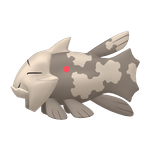
Relicanth ジーランス
Water
Rock
Generation III
Longevity Pokémon
Height 1.0m Weight 23.4kg
Swift Swim
Rock Head
Sturdy (Hidden Ability)
Pokémon Profile
RELICANTH is a Pokémon species that existed for a hundred million years without ever changing its form. This ancient Pokémon feeds on microscopic organisms with its toothless mouth.
Base Stats
Form Base Stats:Relicanth · Total 485
HP
100
Attack
90
Defense
130
Sp. Atk
45
Sp. Def
65
Speed
55
Basic Info
- Gender Ratio
- ♂ 87.5% / ♀ 12.5%
- Catch Rate
- 25(3.3%)
- Egg Groups
- Water 1 / Water 2
- Egg Cycles
- 40
- Base Friendship
- 50
- EV Yield
- HP+1、Defense+1
- Base Experience
- 170
- Shape
- Piscine
- Color
- Gray
- Experience
- 1,250,000(Slow)
Type Matchups View full type chart →
Defensive (when attacked)
4× Weakness
Grass ×4
2× Weakness
Electric ×2
Fighting ×2
Ground ×2
1/4 Resistance
Fire ×0.25
1/2 Resistance
Normal ×0.5
Ice ×0.5
Poison ×0.5
Flying ×0.5
Evolution Chain
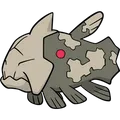 Relicanth
Learnset
| Level | Moves | Type | Category | Power | Accuracy | PP |
|---|---|---|---|---|---|---|
| — | Tackle | Normal | Physical | 40 | 100 | 35 |
| — | Harden | Normal | Status | — | — | 30 |
| 5 | Water Gun | Water | Special | 40 | 100 | 25 |
| 10 | Ancient Power | Rock | Special | 60 | 100 | 5 |
| 15 | Yawn | Normal | Status | — | — | 10 |
| 20 | Dive | Water | Physical | 80 | 100 | 10 |
| 25 | Take Down | Normal | Physical | 90 | 85 | 20 |
| 30 | Aqua Tail | Water | Physical | 90 | 90 | 10 |
| 35 | Rest | Psychic | Status | — | — | 10 |
| 40 | Flail | Normal | Physical | — | 100 | 15 |
| 45 | Hydro Pump | Water | Special | 110 | 80 | 5 |
| 50 | Double-Edge | Normal | Physical | 120 | 100 | 15 |
| 55 | Head Smash | Rock | Physical | 150 | 80 | 5 |
| TM | Moves | Type | Category | Power | Accuracy | PP |
|---|---|---|---|---|---|---|
| TM08 | Hyper Beam | Normal | Special | 150 | 90 | 5 |
| TM09 | Giga Impact | Normal | Physical | 150 | 90 | 5 |
| TM19 | Safeguard | Normal | Status | — | — | 25 |
| TM21 | Rest | Psychic | Status | — | — | 10 |
| TM22 | Rock Slide | Rock | Physical | 75 | 90 | 10 |
| TM24 | Snore | Normal | Special | 50 | 100 | 15 |
| TM25 | Protect | Normal | Status | — | — | 10 |
| TM27 | Icy Wind | Ice | Special | 55 | 95 | 15 |
| TM31 | Attract | Normal | Status | — | 100 | 15 |
| TM32 | Sandstorm | Rock | Status | — | — | 10 |
| TM33 | Rain Dance | Water | Status | — | — | 5 |
| TM35 | Hail | Ice | Status | — | — | 10 |
| TM36 | Whirlpool | Water | Special | 35 | 85 | 15 |
| TM39 | Facade | Normal | Physical | 70 | 100 | 20 |
| TM45 | Dive | Water | Physical | 80 | 100 | 10 |
| TM48 | Rock Tomb | Rock | Physical | 60 | 95 | 15 |
| TM52 | Bounce | Flying | Physical | 85 | 85 | 5 |
| TM53 | Mud Shot | Ground | Special | 55 | 95 | 15 |
| TM54 | Rock Blast | Rock | Physical | 25 | 90 | 10 |
| TM55 | Brine | Water | Special | 65 | 100 | 10 |
| TM76 | Round | Normal | Special | 60 | 100 | 15 |
| TM81 | Bulldoze | Ground | Physical | 60 | 100 | 20 |
| TM98 | Stomping Tantrum | Ground | Physical | 75 | 100 | 10 |
| TM01 | Body Slam | Normal | Physical | 85 | 100 | 15 |
| TM03 | Hydro Pump | Water | Special | 110 | 80 | 5 |
| TM04 | Surf | Water | Special | 90 | 100 | 15 |
| TM05 | Ice Beam | Ice | Special | 90 | 100 | 10 |
| TM06 | Blizzard | Ice | Special | 110 | 70 | 5 |
| TM10 | Earthquake | Ground | Physical | 100 | 100 | 10 |
| TM16 | Waterfall | Water | Physical | 80 | 100 | 15 |
| TM17 | Amnesia | Psychic | Status | — | — | 20 |
| TM20 | Substitute | Normal | Status | — | — | 10 |
| TM26 | Endure | Normal | Status | — | — | 10 |
| TM27 | Sleep Talk | Normal | Status | — | — | 10 |
| TM45 | Muddy Water | Water | Special | 90 | 85 | 10 |
| TM46 | Iron Defense | Steel | Status | — | — | 15 |
| TM49 | Calm Mind | Psychic | Status | — | — | 20 |
| TM67 | Earth Power | Ground | Special | 90 | 100 | 10 |
| TM69 | Zen Headbutt | Psychic | Physical | 80 | 90 | 15 |
| TM75 | Stone Edge | Rock | Physical | 100 | 80 | 5 |
| TM76 | Stealth Rock | Rock | Status | — | — | 20 |
| TM84 | Scald | Water | Special | 80 | 100 | 15 |
| TM98 | Liquidation | Water | Physical | 85 | 100 | 10 |
| TM99 | Body Press | Fighting | Physical | 80 | 100 | 10 |
Wild Encounters
Generation III
Emerald
Hoenn
| Location | Level | Method | Chance |
|---|---|---|---|
| Route 124 | Lv.30-35 | Seaweed | 4% |
| Route 126 | Lv.30-35 | Seaweed | 4% |
Ruby
Hoenn
| Location | Level | Method | Chance |
|---|---|---|---|
| Route 124 | Lv.30-35 | Seaweed | 4% |
| Route 126 | Lv.30-35 | Seaweed | 4% |
Sapphire
Hoenn
| Location | Level | Method | Chance |
|---|---|---|---|
| Route 124 | Lv.30-35 | Seaweed | 4% |
| Route 126 | Lv.30-35 | Seaweed | 4% |
Generation IV
Diamond
Sinnoh
| Location | Level | Method | Chance |
|---|---|---|---|
| Sea Route 226 | Lv.40-50 | Super Rod | 15% |
HeartGold
Kanto
| Location | Level | Method | Chance |
|---|---|---|---|
| Route 12 | Lv.20 | Good RodSwarm: yes | 40% |
| Lv.40 | Super RodSwarm: yes | 40% | |
| Lv.10 | Old RodSwarm: yes | 15% |
Pearl
Sinnoh
| Location | Level | Method | Chance |
|---|---|---|---|
| Sea Route 226 | Lv.40-50 | Super Rod | 15% |
Platinum
Sinnoh
| Location | Level | Method | Chance |
|---|---|---|---|
| Sea Route 226 | Lv.20-50 | Super Rod | 15% |
SoulSilver
Kanto
| Location | Level | Method | Chance |
|---|---|---|---|
| Route 12 | Lv.20 | Good RodSwarm: yes | 40% |
| Lv.40 | Super RodSwarm: yes | 40% | |
| Lv.10 | Old RodSwarm: yes | 15% |
Generation V
Black
Unova
| Location | Level | Method | Chance |
|---|---|---|---|
| Route 4 | Lv.35-60 | Super Rod (ripples) | 40% |
Black 2
Unova
| Location | Level | Method | Chance |
|---|---|---|---|
| Route 4 | Lv.50-70 | Super Rod (ripples) | 15% |
White
Unova
| Location | Level | Method | Chance |
|---|---|---|---|
| Route 4 | Lv.35-60 | Super Rod (ripples) | 40% |
White 2
Unova
| Location | Level | Method | Chance |
|---|---|---|---|
| Route 4 | Lv.50-70 | Super Rod (ripples) | 15% |
Generation VI
X
Kalos
| Location | Level | Method | Chance |
|---|---|---|---|
| Ambrette Town | Lv.35 | Super Rod | 60% |
| Cyllage City | Lv.35 | Super Rod | 60% |
Y
Kalos
| Location | Level | Method | Chance |
|---|---|---|---|
| Ambrette Town | Lv.35 | Super Rod | 60% |
| Cyllage City | Lv.35 | Super Rod | 60% |
Generation VII
Moon
Alola
| Location | Level | Method | Chance |
|---|---|---|---|
| Poni Wilds | Lv.10-43 | Bubbling spots | 10% |
| Lv.10-43 | Super Rod | 1% |
Sun
Alola
| Location | Level | Method | Chance |
|---|---|---|---|
| Poni Wilds | Lv.10-43 | Bubbling spots | 10% |
| Lv.10-43 | Super Rod | 1% |
Ultra Moon
Alola
| Location | Level | Method | Chance |
|---|---|---|---|
| Ancient Poni Path | Lv.10-49 | Bubbling spots | 10% |
| Lv.10-44 | Super Rod | 1% | |
| Poni Breaker Coast | Lv.10-49 | Bubbling spots | 10% |
| Lv.10-44 | Super Rod | 1% |
Ultra Sun
Alola
| Location | Level | Method | Chance |
|---|---|---|---|
| Ancient Poni Path | Lv.10-49 | Bubbling spots | 10% |
| Lv.10-44 | Super Rod | 1% | |
| Poni Breaker Coast | Lv.10-49 | Bubbling spots | 10% |
| Lv.10-44 | Super Rod | 1% |
Relicanth Competitive Movesets & Sets
Relicanth movesets cover 6 generations and 13 formats with 24 sets in total, including moves, abilities, items, natures, EVs and Tera types with analysis.
6 Generation
13 Format
24 set
View All Movesets
Pokédex Entries
Generation III
- Ruby:
- RELICANTH is a Pokémon species that existed for a hundred million years without ever changing its form. This ancient Pokémon feeds on microscopic organisms with its toothless mouth.
- Sapphire:
- RELICANTH is a rare species that was discovered in deep-sea explorations. This Pokémon’s body withstands the enormous water pressure of the ocean depths. Its body is covered in tough scales that are like craggy rocks.
- Emerald:
- A Pokémon that was once believed to have been extinct. The species has not changed its form for 100 million years. It walks on the seafloor using its pectoral fins.
- FireRed:
- It has remained unchanged for 100 million years. It was discovered during a deep-sea exploration.
Generation IV
- Diamond:
- A rare Pokémon discovered during a deep-sea exploration. It has not changed in over 100 million years.
- HeartGold:
- Discovered by chance during deep-sea explorations, it has not changed since ancient times.
Generation V
- Black:
- A rare Pokémon discovered during a deep-sea exploration. It has not changed in over 100 million years.
Generation VI
- X:
- It has remained unchanged for 100 million years. It was discovered during a deep-sea exploration.
- Y:
- A rare Pokémon discovered during a deep-sea exploration. It has not changed in over 100 million years.
- Omega Ruby:
- Relicanth is a Pokémon species that existed for a hundred million years without ever changing its form. This ancient Pokémon feeds on microscopic organisms with its toothless mouth.
- Alpha Sapphire:
- Relicanth is a rare species that was discovered in deep-sea explorations. This Pokémon’s body withstands the enormous water pressure of the ocean depths. Its body is covered in tough scales that are like craggy rocks.
Generation VII
- Sun:
- Its form has remained the same for one hundred million years. Its body is filled with fat, so it can withstand the water pressure of the deep sea.
- Moon:
- It was fortuitously discovered during a deep sea expedition. Its teeth have atrophied, so it now survives on microscopic organisms it sucks up.
- Ultra Sun:
- Thought to have gone extinct, Relicanth was given a name that is a variation of the name of the person who discovered it.
- Ultra Moon:
- The reason it hasn’t changed at all in a hundred million years is that it’s apparently already a perfect life-form.
Generation VIII
- Sword:
- Rock-hard scales and oil-filled swim bladders allow this Pokémon to survive the intense water pressure of the deep sea.
- Shield:
- This Pokémon was discovered during deep-sea exploration. Its appearance hasn’t changed in 100,000,000 years, so it’s called a living fossil.