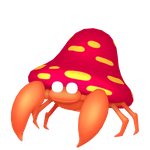
Parasect パラセクト
Bug
Grass
Generation I
Mushroom Pokémon
Taille 1.0m Poids 29.5kg
Effect Spore
Dry Skin
Damp (Talent caché)
Profil du Pokémon
A host-parasite pair in which the parasite mushroom has taken over the host bug. Prefers damp places.
Statistiques de base
Stats de base de la forme:Parasect · Total 405
PV
60
Attaque
95
Défense
80
Atq. Spé.
60
Déf. Spé.
80
Vitesse
30
Informations de base
- Ratio de genre
- ♂ 50% / ♀ 50%
- Taux de capture
- 75(9.8%)
- Groupes d'œuf
- Insecte / Plante
- Cycles d'éclosion
- 20
- Bonheur de base
- 70
- EV rapportés
- Attaque+2、Défense+1
- Expérience de base
- 142
- Forme du corps
- Insectoïde
- Couleur
- Rouge
- Expérience
- 1,000,000(Moyen-rapide)
Affinités de types Voir le tableau complet des types →
Défensif (quand on est attaqué)
Résistance 1/4
Grass ×0.25
Ground ×0.25
Résistance 1/2
Water ×0.5
Electric ×0.5
Fighting ×0.5
Offensif (quand on attaque)
Résistance 1/2
Fire ×0.5
Poison ×0.5
Flying ×0.5
Steel ×0.5
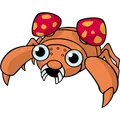
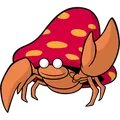
Chaîne d'évolution
Apprentissage
| Niveau | Capacités | Type | Catégorie | Puissance | Précision | PP |
|---|---|---|---|---|---|---|
| — | Cross Poison | Poison | Physique | 70 | 100 | 20 |
| — | Scratch | Normal | Physique | 40 | 100 | 35 |
| — | Stun Spore | Grass | Statut | — | 75 | 30 |
| — | Poison Powder | Poison | Statut | — | 75 | 35 |
| — | Absorb | Grass | Spécial | 20 | 100 | 25 |
| 6 | Stun Spore | Grass | Statut | — | 75 | 30 |
| 6 | Poison Powder | Poison | Statut | — | 75 | 35 |
| 11 | Absorb | Grass | Spécial | 20 | 100 | 25 |
| 17 | Fury Cutter | Bug | Physique | 40 | 95 | 20 |
| 22 | Spore | Grass | Statut | — | 100 | 15 |
| 29 | Slash | Normal | Physique | 70 | 100 | 20 |
| 37 | Growth | Normal | Statut | — | — | 20 |
| 44 | Giga Drain | Grass | Spécial | 75 | 100 | 10 |
| 51 | Aromatherapy | Grass | Statut | — | — | 5 |
| 59 | Rage Powder | Bug | Statut | — | — | 20 |
| 66 | X-Scissor | Bug | Physique | 80 | 100 | 15 |
| CT | Capacités | Type | Catégorie | Puissance | Précision | PP |
|---|---|---|---|---|---|---|
| 招式学习器09 | Bullet Seed | Grass | Physique | 25 | 100 | 30 |
| 招式学习器11 | Sunny Day | Fire | Statut | — | — | 5 |
| 招式学习器15 | Hyper Beam | Normal | Spécial | 150 | 90 | 5 |
| 招式学习器16 | Light Screen | Psychic | Statut | — | — | 30 |
| 招式学习器17 | Protect | Normal | Statut | — | — | 10 |
| 招式学习器19 | Giga Drain | Grass | Spécial | 75 | 100 | 10 |
| 招式学习器22 | Solar Beam | Grass | Spécial | 120 | 100 | 10 |
| 招式学习器28 | Dig | Ground | Physique | 80 | 100 | 10 |
| 招式学习器31 | Brick Break | Fighting | Physique | 75 | 100 | 15 |
| 招式学习器32 | Double Team | Normal | Statut | — | — | 15 |
| 招式学习器36 | Sludge Bomb | Poison | Spécial | 90 | 100 | 10 |
| 招式学习器40 | Aerial Ace | Flying | Physique | 60 | — | 20 |
| 招式学习器42 | Facade | Normal | Physique | 70 | 100 | 20 |
| 招式学习器44 | Rest | Psychic | Statut | — | — | 10 |
| 招式学习器45 | Attract | Normal | Statut | — | 100 | 15 |
| 招式学习器46 | Thief | Dark | Physique | 60 | 100 | 25 |
| 招式学习器53 | Energy Ball | Grass | Spécial | 90 | 100 | 10 |
| 招式学习器54 | False Swipe | Normal | Physique | 40 | 100 | 40 |
| 招式学习器58 | Endure | Normal | Statut | — | — | 10 |
| 招式学习器68 | Giga Impact | Normal | Physique | 150 | 90 | 5 |
| 招式学习器70 | Flash | Normal | Statut | — | 100 | 20 |
| 招式学习器75 | Swords Dance | Normal | Statut | — | — | 20 |
| 招式学习器81 | X-Scissor | Bug | Physique | 80 | 100 | 15 |
| 招式学习器82 | Sleep Talk | Normal | Statut | — | — | 10 |
| 招式学习器86 | Grass Knot | Grass | Spécial | — | 100 | 20 |
| 招式学习器87 | Swagger | Normal | Statut | — | 85 | 15 |
| 招式学习器90 | Substitute | Normal | Statut | — | — | 10 |
| 招式学习器93 | Cut | Normal | Physique | 50 | 95 | 30 |
| 招式学习器98 | Rock Smash | Fighting | Physique | 40 | 100 | 15 |
Rencontres sauvages
Generation I
Blue
Kanto
| Lieu | Niveau | Méthode | Probabilité |
|---|---|---|---|
| Cerulean Cave | Lv.52-64 | Walking | 10% |
| Safari Zone | Lv.25-30 | Walking | 5% |
Green
Kanto
| Lieu | Niveau | Méthode | Probabilité |
|---|---|---|---|
| Cerulean Cave | Lv.52-64 | Walking | 10% |
| Safari Zone | Lv.25-30 | Walking | 5% |
Red
Kanto
| Lieu | Niveau | Méthode | Probabilité |
|---|---|---|---|
| Cerulean Cave | Lv.52-64 | Walking | 10% |
| Safari Zone | Lv.25-30 | Walking | 5% |
Yellow
Kanto
| Lieu | Niveau | Méthode | Probabilité |
|---|---|---|---|
| Cerulean Cave | Lv.54 | Walking | 5% |
| Safari Zone | Lv.27-32 | Walking | 10% |
| Route 18 | Lv.22-100 | In-game trade | 100% |
Generation II
Crystal
Johto
| Lieu | Niveau | Méthode | Probabilité |
|---|---|---|---|
| Mt. Silver | Lv.46-48 | WalkingDay | 10% |
| Lv.46-48 | WalkingMorning | 10% | |
| Lv.46-48 | WalkingNight | 10% |
Generation III
FireRed
Kanto
| Lieu | Niveau | Méthode | Probabilité |
|---|---|---|---|
| Cerulean Cave | Lv.49-64 | Walking | 20% |
| Safari Zone | Lv.25-30 | Walking | 5% |
LeafGreen
Kanto
| Lieu | Niveau | Méthode | Probabilité |
|---|---|---|---|
| Cerulean Cave | Lv.49-64 | Walking | 20% |
| Safari Zone | Lv.25-30 | Walking | 5% |
Generation IV
HeartGold
Johto
| Lieu | Niveau | Méthode | Probabilité |
|---|---|---|---|
| Johto Safari Zone | Lv.41 | Walking | 10% |
Kanto
| Lieu | Niveau | Méthode | Probabilité |
|---|---|---|---|
| Cerulean Cave | Lv.38 | WalkingMorning | 20% |
| Lv.38 | WalkingDay | 20% | |
| Lv.40-47 | Walking | 20% | |
| Lv.38 | WalkingRadio: offNight | 10% |
SoulSilver
Johto
| Lieu | Niveau | Méthode | Probabilité |
|---|---|---|---|
| Johto Safari Zone | Lv.41 | Walking | 10% |
Kanto
| Lieu | Niveau | Méthode | Probabilité |
|---|---|---|---|
| Cerulean Cave | Lv.38 | WalkingMorning | 20% |
| Lv.38 | WalkingDay | 20% | |
| Lv.40-47 | Walking | 20% | |
| Lv.38 | WalkingRadio: offNight | 10% |
Generation VII
Ultra Moon
Alola
| Lieu | Niveau | Méthode | Probabilité |
|---|---|---|---|
| Route 11 | Lv.26-29 | Walking | 10% |
Ultra Sun
Alola
| Lieu | Niveau | Méthode | Probabilité |
|---|---|---|---|
| Route 11 | Lv.26-29 | Walking | 10% |
Movesets compétitifs et sets de Parasect
Les movesets de Parasect couvrent 7 générations et 10 formats avec 17 sets au total, incluant capacités, talents, objets, natures, EVs et types Téracristal avec analyse.
7 Génération
10 Format
17 set
Voir tous les movesets
Entrées du Pokédex
Generation I
- Red:
- A host-parasite pair in which the parasite mushroom has taken over the host bug. Prefers damp places.
- Yellow:
- The bug host is drained of energy by the mushrooms on its back. They appear to do all the thinking.
Generation II
- Gold:
- It stays mostly in dark, damp places, the preference not of the bug, but of the big mush rooms on its back.
- Silver:
- The larger the mushroom on its back grows, the stronger the mush room spores it scatters.
- Crystal:
- When nothing's left to extract from the bug, the mushrooms on its back leave spores on the bug's egg.
Generation III
- Ruby:
- PARASECT is known to infest large trees en masse and drain nutrients from the lower trunk and roots. When an infested tree dies, they move onto another tree all at once.
- Emerald:
- PARASECT are known to infest the roots of large trees en masse and drain nutrients. When an infested tree dies, they move onto another tree all at once.
- FireRed:
- It scatters toxic spores from the mushroom cap. In China, the spores are used as herbal medicine.
- LeafGreen:
- A host-parasite pair in which the parasite mushroom has taken over the host bug. Prefers damp places.
Generation IV
- Diamond:
- A mushroom grown larger than the host’s body controls PARASECT. It scatters poisonous spores.
- Pearl:
- It is controlled by a mushroom grown larger than the bug body. It is said to prefer damp places.
- HeartGold:
- It stays mostly in dark, damp places, the preference not of the bug, but of the big mushroom on its back.
- SoulSilver:
- The larger the mushroom on its back grows, the stronger the mushroom spores it scatters.
Generation V
- Black:
- A mushroom grown larger than the host’s body controls Parasect. It scatters poisonous spores.
Generation VI
- X:
- A mushroom grown larger than the host’s body controls Parasect. It scatters poisonous spores.
- Y:
- The larger the mushroom on its back grows, the stronger the mushroom spores it scatters.
- Omega Ruby:
- Parasect is known to infest large trees en masse and drain nutrients from the lower trunk and roots. When an infested tree dies, they move onto another tree all at once.
Generation VII
- Sun:
- The large mushroom on its back controls it. It often fights over territory with Shiinotic.
- Moon:
- It scatters toxic spores from its mushroom cap. Once harvested, these spores can be steeped and boiled down to prepare herbal medicines.
- Ultra Sun:
- The bug is mostly dead, with the mushroom on its back having become the main body. If the mushroom comes off, the bug stops moving.
- Ultra Moon:
- Its poisonous spores are also used in traditional medicine. Apparently, spores produced in Alola are not of very good quality.
- Let's Go Pikachu:
- The bug host is drained of energy by the mushroom on its back. The mushroom appears to do all the thinking.
Generation VIII
- Legends: Arceus:
- Mushroom-lacking specimens of this Pokémon lie unmoving in the forest, lending credence to the hypothesis that the large mushroom is in control of Parasect's actions.