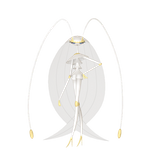
Moves
Despite its poor coverage, U-turn is Pheromosa's most important move, allowing it to pivot out against its numerous checks and do considerable damage to its switch-ins. It's also Pheromosa's best way to hit Psychic-types like Ultra Necrozma and Mega Mewtwo Y while serving as a safer move to use against Dark-types when various foes are going to predict Low Kick and switch out.
Low Kick is the safest and the most consistent Fighting-type STAB move for Pheromosa, as it threatens various Dark- and Steel-types while doing enough damage to 2HKO support Arceus formes and offensive Primal Groudon. Low Kick also has enough power to enable Pheromosa to revenge kill foes like Primal Kyogre and Mild Yveltal after little prior damage.
Ice Beam hits many Pokemon that can pivot into U-turn and Low Kick hard, OHKOing Zygarde, Mega Salamence, and Rayquaza and 2HKOing Giratina-O. After a U-turn, Arceus-Flying is 2HKOed as well.
The fourth moveslot is the best used to improve Pheromosa's matchup against its typical checks. Throat Chop OHKOes Mega Gengar, takes out Lunala after its Shadow Shield has been broken, and 2HKOes Marshadow and Arceus-Ghost.
Poison Jab enables Pheromosa to 2HKO Xerneas and, most of the time, Arceus-Fairy. If lacking defensive investment, a Xerneas hit by Poison Jab after Stealth Rock damage will be left at low enough health to be taken out by U-turn the next time it switches into Pheromosa.
Drill Run OHKOes Mega Gengar, 2HKOes Toxapex after Stealth Rock damage, and serves as the hardest way to hit Magearna, guaranteeing 2HKO on it unlike Low Kick.
Set Details
Maximum Attack investment with Life Orb gives Pheromosa enough power to 2HKO support Arceus formes with Low Kick and OHKO Mega Gengar and Ultra Necrozma with the appropriate moves.
Speed EVs are maximized for Pheromosa to take advantage of its stellar Speed tier, enabling it to outspeed almost the entire tier, including some fast foes like Mega Gengar, Ultra Necrozma, and Deoxys-A lacking Extreme Speed. A Naive nature enables Pheromosa to outspeed Mega Mewtwo Y and +1 Zygarde. Beast Boost boosting Speed after every KO almost never proves to be useful, however.
A Naughty nature can be used to give Pheromosa enough power to 2HKO the majority of support Arceus formes and have a better chance to 2HKO Primal Groudon without relying on entry hazards.
Life Orb improves Pheromosa's damage output to achieve the aforementioned KOs with physical attacks and OHKO any regular Zygarde variant and 2HKO Giratina-O with Ice Beam.
If you're using a Naughty nature, Beast Boost boosts Pheromosa's Attack upon KOing a foe, which can see a situational use when cleaning up late-game after its checks have been dealt with.
Usage Tips
Pheromosa will have very limited opportunities to safely enter the field. As it cannot switch into any attacks or status moves, it is ideal to bring in Pheromosa as a lead, after a teammate has been KOed, or with an aggressive double switch.
With the amount of difficulty involved with giving Pheromosa a chance to attack, it is crucially important to appropriately predict with it. Most of its switch-ins are reliant on their typing to take on Pheromosa, so be quick to identify foes that will potentially pivot into it. As there are multitude of Pokemon that can safely pivot into Pheromosa, U-turn is a weak yet safe option to identify what foe tends to switch into its attacks. U-turn is also a safe option when Pheromosa did not predict correctly against a slower incoming foe and has to retreat afterwards.
While Pheromosa can revenge kill threats like Ultra Necrozma, unboosted Mega Salamence, and Mega Mewtwo Y with ease, there are specific matchups where Pheromosa cannot recklessly take on threats it can strike first. The most notable example of this is Zygarde-C with possible way of boosting and Substitute. Pheromosa can avoid getting OHKOed from +1 Thousand Arrows from full health, but if Zygarde-C has Dragon Tail, it will simply OHKO Pheromosa after blocking Ice Beam with Substitute. This means Pheromosa should refrain from recklessly attempting to revenge kill Zygarde-C behind a Substitute without much information about its moveset.
Pheromosa's teammates typically benefit from its ability to pressure slower, bulky foes and wear down other foes with U-turn. Entry hazards can punish switch-ins like Xerneas harder should they attempt to pivot into Pheromosa. Stealth Rock is especially useful to prevent Ho-Oh from consistently switching into Pheromosa without any concern and help generate opportunities to 2HKO defensive Primal Groudon and Lugia.
Teams lacking durable Ghost-types will struggle to properly handle Pheromosa and will typically send in foes that can take Low Kick. This will give Pheromosa more opportunities to deal more damage on foes instead of being forced to pivot often with U-turn. Teams that rely on Pokemon like Mega Salamence and Giratina-O, which are vulnerable to Ice Beam, struggle to properly keep Pheromosa in check. In these matchups, fully take advantage of Pheromosa's offensive capabilities and prioritize netting as much damage as possible.
Team Options
Pheromosa's efficiency as an attacker largely depends on availability of entry hazards. Very common yet needed Stealth Rock users like Primal Groudon and Necrozma-DM can provide Stealth Rock support while checking Fairy-types. Primal Groudon benefits from Pheromosa's ability to threaten its Dragon-type checks like Zygarde-C, Mega Salamence, and Giratina-O. Offensive sets can take advantage of Pheromosa's U-turn to switch in unharmed, which is helpful when it desires to preserve its health to keep Xerneas in line or set up without taking too much damage. Necrozma-DM running Stealth Rock may struggle against other Steel-types, which Pheromosa can offensively threaten with Low Kick. Offensive teams can use a more dedicated entry hazard lead like Cloyster or Deoxys-S, which enables Pheromosa to pressure opposing teams from early-game through racking up considerable damage by forcing switches.
With the exception of Ho-Oh, most switch-ins to Pheromosa like Xerneas, Arceus-Fairy, and Toxapex are vulnerable to Mega Gengar. Most balanced and defensive teams will have a switch-in, if not more, that can persistently switch into Pheromosa, and Mega Gengar can force a trade with a problematic foe to ease Pheromosa's attempts to dish out damage. Pheromosa has the ability to 2HKO Pokemon like Primal Groudon and Arceus-Dark and threaten to heavily impair specially bulky foes like Primal Kyogre, all of which Mega Gengar alone cannot take down.
Xerneas is another offensive partner that should be strongly considered. The ability to check Yveltal and Marshadow is greatly appreciated, and Geomancy variants can take advantage of defensive cores worn down by Pheromosa's attacks. Other minor benefits like cleric and Defog support are notable as well, as any status ailments are detrimental to Pheromosa, and removing entry hazards will prevent it from getting worn down too quickly with Life Orb recoil.
While Pheromosa can pressure many faster threats, certain sweepers like Primal Groudon, Necrozma-DM, and Xerneas can simply set up on Pheromosa in a one-on-one situation. This means Pheromosa alone isn't reliable enough to keep offensive threats from getting out of hand. Priority move users like Yveltal, Marshadow, and Extreme Killer Arceus can provide more security against the aforementioned threats, as the damage Pheromosa will do to them will be sufficient to put them in range of many priority moves when combined with entry hazards or other prior damage. Yveltal and Marshadow also prove to be useful offensive partners with their ability to threaten Ghost-types.
Various defensive partners are needed for instances where Pheromosa fails to predict correctly. Various support Arceus formes, Giratina-O, and Mega Salamence will handle Primal Groudon, while Steel-types like Ferrothorn and Magearna can take advantage of Fairy-types that switch into Pheromosa by setting entry hazards or generating momentum, respectively.